The German yacht-building industry relies on highly specialised craftspeople and technicians, each of whom has mastered their own trade to the highest standard. If you are a shipyard, a supplier or a recruitment manager planning which Careers in yacht building To help you identify the skills you need for your next project, it’s useful to have a clear overview of roles, requirements and salaries. This article outlines the key specialist profiles – from electronics technicians to mechanics and welders, right through to interior fit-out specialists – and shows how you can recruit these skilled workers via Temporary staffing Win in a predictable and legally sound manner.
Table of contents
- What does an electronics technician specialising in yacht technology do, and how much do they earn?
- What roles do mechanics and marine engineers play in yacht building?
- What do construction fitters and welders do in yacht building?
- What are the responsibilities of pipework fitters and HVAC technicians on board?
- What role do shipyard and commissioning engineers play?
- What do electronics technicians specialising in energy and building services engineering do in yacht building?
- Who designs the interior fit-out and finishes of a yacht?
- How do salaries differ across the various professions in yacht building?
- How does temporary work meet the demand for these specialists?
- Conclusion
- FAQ
Estimated reading time: 11 minutes
What does an electronics technician specialising in yacht technology do, and how much do they earn?
Electronics technicians specialising in marine engineering are often referred to as yacht electronics technicians in the yacht-building industry, as they are responsible for the entire electrical infrastructure on board the yacht. This means they design, install and test the complex on-board electrical systems. They draw up the necessary documentation and ensure that navigation systems, communication equipment and other electrical systems function flawlessly.
During commissioning, electronics technicians work in almost every area of the ship. From the bridge to the cabins and the engine rooms, they ensure that the lighting, climate control and safety systems are working properly. As part of this, they also connect all comfort and entertainment systems.
Electronics technicians specialising in yacht building are in high demand. Depending on the volume of work, their qualifications and professional experience, they earn between €3,500 and €5,000 gross per month.
What roles do mechanics and marine engineers play in yacht building?
Mechanics and marine engineers install and assemble technical systems in the engine room. They then inspect and maintain the systems and commission them. These include the main propulsion systems, generators, pumps, and hydraulic and cooling systems.
With the increasing prevalence of hybrid and diesel-electric powertrains, they must possess specialist expertise in the field of energy and environmental technology. They oversee the test runs of the systems and measure, amongst other things, pressures and the flow rates of fuels and oils. They also coordinate the main powertrains and the energy supply.
There are plenty of job opportunities for mechanics and marine engineers in the yacht-building industry, all over the world. German shipyards also offer the chance to work on international projects. The salary ranges from €3,000 and €4,800 gross per month. There are additional payments for assignments abroad, as well as for shift work and weekend work.
What do construction fitters and welders do in yacht building?
Structural fitters and welders create the joints and welds that give the vessels their shape and ensure their structural integrity. To achieve this, they work with the utmost precision, particularly in yacht building. Their work must not only be able to withstand long-term stress, but must also meet the highest aesthetic standards in visible areas. This applies in particular to all visible parts of the decks and superstructures.
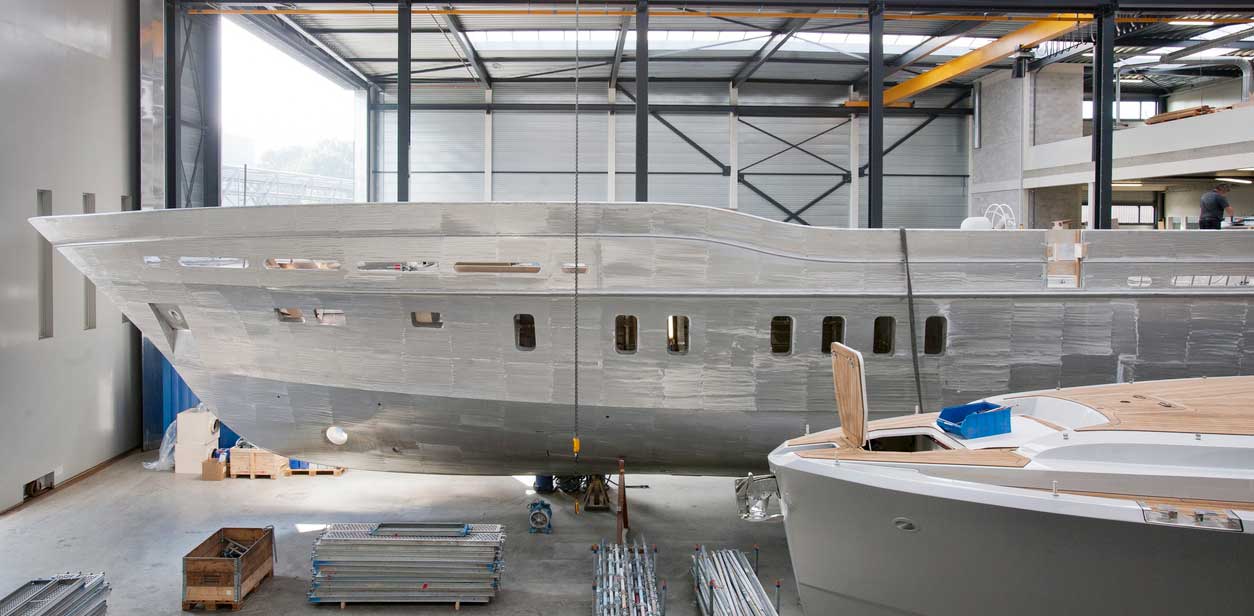
In addition, they also work in quality assurance, where they check the strength and density of the structures. Aluminium is frequently used in this context. This material offers high strength whilst being comparatively lightweight. This is particularly true of the superstructures, whose weight affects stability.
In addition, the fabrication fitters and welders work with modern light-metal alloys and stainless steel. This requires specialised welding techniques to join these materials. Their work is therefore of crucial importance in terms of the yacht’s structural safety and durability.
Such specialists remain in high demand in the new-build and refit sectors for yachts. Their earnings vary depending on their experience and the company, ranging from €3,000 and €4,500 gross per month.
What are the responsibilities of pipework fitters and HVAC technicians on board?
Pipe fitters and plant mechanics specialising in plumbing, heating and air conditioning (SHK) are responsible for installing water and waste water systems, air-conditioning systems and hydraulic lines on board. A wide range of hydraulic systems are used on yachts. Among other things, they operate cranes, as well as steering and anchoring systems.
As design also plays a key role in yacht building, these systems must be integrated into the overall design as discreetly as possible. This makes the work very challenging, as it requires excellent planning and a high degree of precision. During commissioning, it must then be ensured that the systems function reliably, that all pipes are leak-free and that the specified flow rates are achieved.
This occupational group is also in high demand in the yacht-building industry. As well as working on new builds, they are also involved in the maintenance and technical upgrades of vessels. Their earnings range from €3,200 and €4,600 per month.
What role do shipyard and commissioning engineers play?
Shipyard and commissioning technicians coordinate the testing and handover processes. To this end, they plan and carry out tests and document the operational capability of the systems in accordance with the specified requirements specification. This ranges from interior fittings and machinery to navigation systems.
They accompany the yacht during sea trials and draw up reports on its performance, fuel consumption and technical stability. Once all the tests have been completed, they prepare the necessary documentation and hand it over to the owners as proof.
Shipyard and commissioning technicians play a key role in yacht building. They act as the link between the shipyard management, the relevant specialist departments and the owners. As such, they bear a high level of responsibility and earn between €4,000 and €6,500 gross per month.
What do electronics technicians specialising in energy and building services engineering do in yacht building?
When building a yacht, electronics technicians specialising in energy and building services engineering carry out tasks that are comparable to those performed on land. On board, however, they work under specific maritime conditions. This means that the systems and installations must be better protected against the weather and the elements.
They are responsible for the power supply, the lighting systems, the air conditioning and the vehicle’s electrical system as a whole. This also includes complex battery systems and power conversion units. These are then combined with solar panels and waste heat recovery systems.
With the increasing electrification of vehicles and the use of hybrid powertrains, these skilled workers are becoming increasingly important. This leads to good career prospects. Salaries range from €3,500 and €5,000 gross per month, although the trend is clearly upwards as specialisation increases.
Who designs the interior fit-out and finishes of a yacht?
The specialists in interior fit-out and surface design play a key role in shaping the appearance and atmosphere on board. To this end, joiners, upholsterers, painters, varnishers and corrosion protection technicians work together here. They create the yacht’s final appearance.
Their duties include furniture making and surface finishing, as well as inspecting and approving this work. In addition, they carry out painting work and the associated preparatory and finishing tasks.
In yacht building, the main focus is on two aspects: high-quality materials and bespoke solutions: high-quality materials and bespoke craftsmanship. To this end, fine woods, marble and leather, as well as metal and glass surfaces, are incorporated. These are tailored to individual requirements and must meet the highest standards.
Demand for specialists in these fields is very high in the yacht-building industry. This results in salaries ranging from €3,000 and €4,500 gross per month.
How do salaries differ across the various professions in yacht building?
The following overview summarises the gross salaries quoted for each occupational group and compares the salary ranges given for the various occupational groups. The figures provided are indicative gross salary ranges. Actual earnings depend, amongst other things, on qualifications, professional experience, place of work, employer, collective agreement status, working time arrangements and allowances. As at May 2026
| Profession | Gross monthly salary |
|---|---|
| Electronics Technician (Yacht Technology) | €3,500 – €5,000 |
| Mechanic / Marine Engineer | €3,000 – €4,800 |
| Construction Mechanic / Welder | €3,000 – €4,500 |
| Pipe fitter / HVAC engineer | €3,200 – €4,600 |
| Shipyard / Commissioning Technician | €4,000 – €6,500 |
| Electronics Technician in Energy and Building Services Engineering | €3,500 – €5,000 |
| Interior Fitting and Surface Specialists | €3,000 – €4,500 |
How does temporary work meet the demand for these specialists?
Each of these trades is highly specialised, and demand varies greatly depending on the stage of construction: during the construction phase, welders, pipeworkers and mechanics are particularly in demand, whilst during the commissioning and handover phase, the demand for electronics technicians and commissioning engineers rises sharply. Via a Temporary agency work under the AÜG Shipyards can deploy exactly the skilled workers they need at each stage of construction – without having to keep all these roles permanently within their permanent workforce.
For specific trades such as interior fit-out, a Contract for work and materials with a specialist subcontractor. The legally sound distinction between temporary agency work and a contract for services depends on whether the worker is subject to instructions, their integration into the business and the terms of the contract.
- Staffing tailored to requirements for each construction phase (structural works, fit-out, commissioning)
- Access to specialist professionals from other European countries
- Legally compliant contract drafting in accordance with the German Temporary Employment Act (AÜG), including equal pay and the relevant collective agreement provisions
- Short-term support for refits and maintenance projects
Please note: The use of temporary workers in shipbuilding is subject to the German Temporary Employment Act (AÜG), including provisions on the maximum duration of temporary employment and the principle of equal pay. You can read more about this in our article on Temporary Employment Act (AÜG).. For an overview of the roles and specialist areas within the German yacht-building industry as a whole, please see our article „Yacht building in Germany: roles, specialist areas & skilled workers„.
Conclusion
Yacht building in Germany combines modern technologies, high precision, exacting quality standards and craftsmanship. This begins with the ship’s design, which draws on the experience gained over recent decades, and continues through to construction, outfitting and energy supply. Every single trade – from electronics technicians and welders to interior fitting specialists – contributes to this high standard. Anyone wishing to reliably meet this demand for skilled workers combines a permanent core workforce with flexible Temporary staffing for periods of peak demand.
How does Zeitarbeit International help shipyards to fill these roles?
Zeitarbeit International We place qualified electronics technicians, mechanics, welders, pipeworkers and commissioning technicians from Eastern Europe in the German yacht-building industry. We ensure that all procedures are carried out in full compliance with the German Temporary Employment Act (AÜG), check that collective agreement and equal pay requirements are met, and provide the appropriate skilled workers on a project-by-project basis.
FAQ
What is the salary for electronics technicians in yacht building?
Electronics technicians specialising in yacht technology earn between €3,500 and €5,000 gross per month, depending on their qualifications, work experience, region and employer.
What is the difference between a mechanic and an electronics technician in yacht building?
Mechanics install, inspect and maintain the technical systems in the engine room, such as propulsion systems, generators and pumps, whilst electronics technicians are responsible for the electrical infrastructure and on-board electrical systems.
Why are welders in such high demand in yacht building?
They produce the joints and welds that give ships their strength, working with aluminium, light metal alloys and stainless steel – all of which place high demands on precision and appearance.
What are the duties of pipeworkers and HVAC technicians on board?
They install water, waste water, air-conditioning and hydraulic systems – including those for cranes, steering and anchoring systems – and ensure they are watertight during commissioning.
How much does a shipyard and commissioning technician earn?
Shipyard and commissioning technicians earn between €4,000 and €6,500 gross per month, as they coordinate and document the entire handover process.
What is the best way to recruit these skilled workers through temporary work?
Through temporary agency work under the German Temporary Agency Work Act (AÜG), shipyards provide the appropriate skilled workers as and when required for each phase of construction, without having to take on all staff on a permanent basis.
Is temporary work or a contract for services more suitable for interior fit-out specialists?
For clearly defined trades such as interior fit-out, a contract for work and materials with a specialist subcontractor is often an option. If the workers are integrated into the shipyard’s work organisation and are subject to its instructions, this suggests that they are being supplied under a temporary agency arrangement. Conversely, where a clearly defined service is provided independently, a contract for work and services may be appropriate.
How quickly does Zeitarbeit International place skilled workers on a shipyard project?
The time taken to find suitable candidates depends on the profile required and their availability. Please contact us well in advance so that we can find the right skilled workers in time for the planned construction phase.
Useful information