Alongside technical equipment and work organisation, staff motivation is a key factor influencing a shipyard’s productivity. This article shows shipyards and supplier companies which incentives, working conditions and forms of team organisation can promote staff retention and performance – ranging from bonus schemes and ergonomics to digital project management.
Table of contents
- Why is modern technology alone not enough to boost productivity?
- What are the key factors in staff retention in the shipbuilding industry?
- Which incentive scheme boosts staff motivation at the shipyard?
- What role does workplace ergonomics play in shipbuilding?
- How do health and safety contribute to staff retention?
- Why are open communication and respect within a team so crucial?
- How can efficient teamwork be achieved on large-scale shipbuilding projects?
- How does digital project management support team organisation?
- How do construction phases, milestones and current project data support project planning?
- How do technology, training and motivation work together to boost productivity?
- Conclusion
- How does Zeitarbeit International help shipyards build motivated, well-integrated teams?
- FAQ
- Why is new technology alone not enough to boost productivity?
- What keeps employees at a shipyard in the long term?
- Why is ergonomics particularly important in shipbuilding?
- How do safety briefings help to retain staff?
- Why is project management so important in large-scale shipbuilding projects?
- How do construction phases and milestones help with project management?
- Do temporary workers also benefit from good team organisation?
- How does Zeitarbeit International support the integration of new skilled workers?
- Useful information
Estimated reading time: 10 minutes
Why is modern technology alone not enough to boost productivity?
Modern technology can speed up workflows and reduce the workload; however, its benefits also depend on how it is integrated into existing processes and used by staff. The skills and motivation of employees, as well as the design of the working environment, play an important role in this regard.
What are the key factors in staff retention in the shipbuilding industry?
Strong staff retention helps shipyards retain experienced skilled workers within the company in the long term. It is fostered, amongst other things, by fair pay, clear career prospects, good working conditions and supportive leadership. Employees are more likely to stay with a company if they find both career prospects and a supportive working environment there.
Which incentive scheme boosts staff motivation at the shipyard?
A transparent and fairly structured incentive scheme can further boost staff motivation at the shipyard. This may include transparent performance-related bonuses, flexible working time arrangements compatible with operational processes, and further training opportunities tailored to staff needs. This gives employees more opportunities to play an active role in shaping their own career development. Such opportunities can strengthen personal responsibility and a sense of identification with their work.
Even in family-run businesses and medium-sized shipyards, such measures can help foster a positive corporate culture and boost staff motivation.
What role does workplace ergonomics play in shipbuilding?
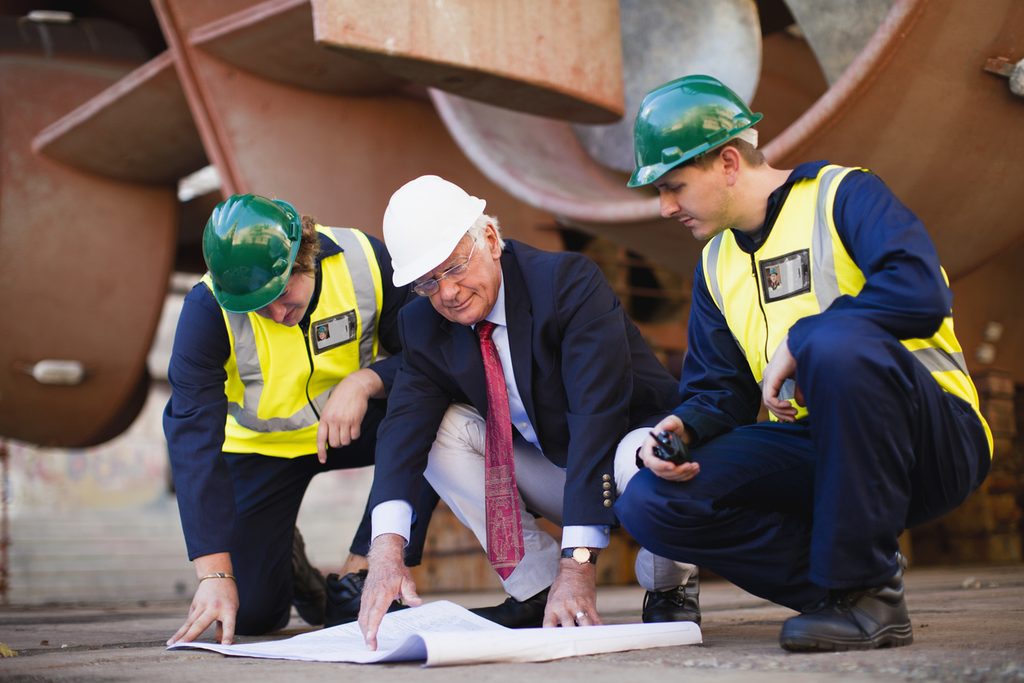
Ergonomics is a key component of healthy working conditions. High or prolonged physical strain can adversely affect employees’ health and performance. It can also lead to fatigue, difficulties concentrating and errors, as well as reducing job satisfaction. Ergonomic workplace design aims to reduce harmful physical strain and adapt working conditions to employees’ physical capabilities.
In shipbuilding in particular, the physical demands are often very high. Workers lift heavy components, weld in awkward positions and often work in confined spaces. Ergonomically designed workstations and work processes help to avoid physical strain and prevent health problems. This reduction in physical strain can promote focused and safe working and reduce the risk of errors.
How do health and safety contribute to staff retention?
Health and safety at work are also of paramount importance in this context. Measures include regular safety briefings and the provision of protective equipment suitable for the specific hazards involved. Employees must be given clear instructions on how to use this equipment correctly. In addition, clear and well-rehearsed emergency procedures are essential. These measures protect employees and safeguard their health. A demonstrable commitment to health and safety in day-to-day working life can also strengthen trust in the employer and thus contribute to long-term staff retention.
Why are open communication and respect within a team so crucial?
Open communication and mutual respect are key to effective teamwork. Through regular dialogue, staff coordinate their tasks both within their own team and with other teams. This enables them to identify problems at an early stage and tackle them together.
Clear and respectful communication facilitates collaboration and helps to clear up misunderstandings and resolve conflicts at an early stage. Managers should set an example of this culture of communication and encourage staff to put forward their own suggestions. Constructive criticism should be actively encouraged so that everyone involved can learn with and from one another.
How can efficient teamwork be achieved on large-scale shipbuilding projects?
In large shipbuilding projects, hundreds of employees may be working on different tasks at the same time. This involves numerous teams from various specialist departments and companies working together. Coordination problems can arise at the interfaces between these teams, leading to delays, duplication of work and unnecessary use of resources. Clear team organisation and professional project management are therefore essential for collaboration at the shipyard.
Effective teamwork requires all team members to be aware of their roles and responsibilities. They must also liaise regularly so that they can respond to new developments.
This also applies when bringing in temporary staff to support a specific project: clear lines of responsibility, clear safety briefings and established lines of communication make it easier for new staff to settle in and integrate.

How does digital project management support team organisation?
Digital tools and specialised shipyard software support the planning, coordination and monitoring of shipbuilding projects. Depending on the range of functions and data integration, these tools can be used to schedule deadlines, track work progress and monitor material flows. On this basis, project management can prioritise tasks and, together with the teams, adapt them to the current status of the project.
A clear division of responsibilities can improve the efficiency of work processes at the shipyard. This helps to reduce unnecessary overlap and misunderstandings between teams. Managers must ensure that each specialist group is aware of its tasks, deadlines and the intended work processes.
How do construction phases, milestones and current project data support project planning?
A shipbuilding project is a complex undertaking comprising numerous interdependent work stages. To ensure clear planning and management, the project is divided into construction phases and work packages. For each phase, tasks, deadlines and resources can be defined, whilst taking into account the dependencies on other phases. Through coordinated planning, suitable tasks can be carried out in parallel, duplication of work can be avoided and project durations can be shortened.
Milestones, checklists and regularly updated project data support the planning and management of the individual construction phases. They enable the project management team to monitor progress on an ongoing basis and identify problems at an early stage. If necessary, they can adjust the schedule and minimise any impact on subsequent work.
This planning also facilitates collaboration between the departments involved. Design, production, quality assurance and procurement must coordinate their requirements and deadlines. This coordination helps to ensure that the necessary materials are available on time and to the required standard, and that staff have access to up-to-date working documents. Quality assurance checks compliance with the specified quality requirements, whilst project management monitors progress against the schedule.
How do technology, training and motivation work together to boost productivity?
Improving productivity in shipbuilding is therefore not a one-off exercise. Instead, it is an ongoing process in which opportunities for improvement are identified, measures are implemented and the results are reviewed. Technical innovations, a well-trained workforce and a highly motivated workforce all play an important role in this.
The targeted improvement of production processes and the application of appropriate lean management methods can reduce waiting times, unnecessary work steps and material wastage. Training tailored to staff needs helps employees learn how to use new technologies safely and keep their knowledge up to date. Automation and digitalisation simplify the performance of routine tasks.
At the same time, the needs of the workforce must be taken into account. Motivation, a safe working environment, ergonomically designed workstations and a clear team structure form an important basis for increasing productivity. A corporate culture that promotes collaboration, open communication and personal responsibility facilitates the introduction of new technologies and processes and can thus strengthen the shipyard’s competitiveness.
Please note: Temporary staff employed on a project basis also benefit from clear health and safety briefings, ergonomically designed workstations and open communication within the team. These measures can make their induction easier and help them become productive more quickly. You can read more about legally compliant procedures in our article on Temporary Employment Act (AÜG).. To find out how digitalisation and further training can further boost productivity, read our article on Digitalisation & Further Training in Shipbuilding.
Conclusion
Productivity in shipbuilding depends on the interplay between suitable technology, efficient processes, skilled workers and good working conditions. Shipyards that improve not only their technical facilities but also working conditions, skills and collaboration can strengthen staff retention and make it easier for skilled workers assigned to specific projects to settle into their roles.
How does Zeitarbeit International help shipyards build motivated, well-integrated teams?
Zeitarbeit International We recruit qualified specialists from Eastern Europe for the German shipbuilding industry and support their integration into your existing teams. We assist with the management of project-based staff placements under temporary agency work arrangements, in compliance with the relevant provisions of the German Temporary Agency Work Act (AÜG).
FAQ
Why is new technology alone not enough to boost productivity?
The extent to which new technology boosts productivity also depends on how it is integrated into work processes, as well as on the skills and motivation of the workforce.
What keeps employees at a shipyard in the long term?
Fair pay, clear career prospects, supportive leadership and good working conditions can help to foster long-term staff retention. In addition, suitable bonus schemes, flexible working hours and further training opportunities are worth considering.
Why is ergonomics particularly important in shipbuilding?
Ergonomics is particularly important in shipbuilding because lifting heavy components, welding in awkward positions and working in confined spaces can place significant physical strain on the body. Ergonomically designed workstations and work processes can reduce physical strain and help prevent health problems.
How do safety briefings help to retain staff?
Clear safety briefings, appropriate protective equipment and well-rehearsed emergency procedures promote safe working practices and can strengthen trust in the employer and boost staff retention.
Why is project management so important in large-scale shipbuilding projects?
In large shipbuilding projects, the tasks of numerous employees, specialist teams and participating companies must be co-ordinated. Structured project management helps to avoid delays, duplication of work and co-ordination issues.
How do construction phases and milestones help with project management?
Construction phases and milestones provide structure to the project and make it easier to coordinate interdependent tasks. Up-to-date project data also helps to identify deviations at an early stage and adjust the planning accordingly.
Do temporary workers also benefit from good team organisation?
Clear lines of responsibility, safety briefings and open communication help specialist staff assigned to specific projects to integrate quickly into existing teams.
How does Zeitarbeit International support the integration of new skilled workers?
We place qualified specialists on project-based assignments and oversee the process in accordance with the Temporary Employment Act (AÜG). In addition, we support their integration into existing teams to help new specialists settle in more easily.
Useful information