
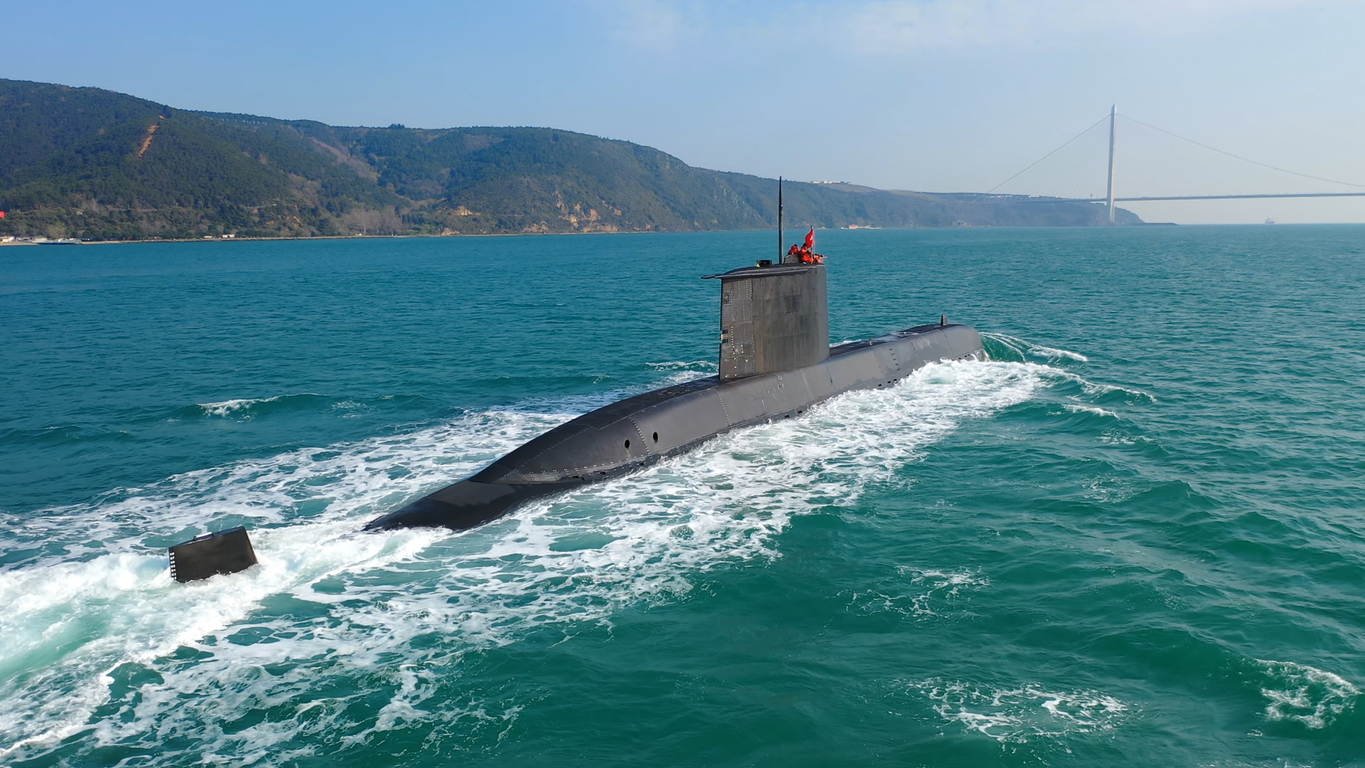
Germany is one of the few countries in the world that can export conventional submarines at the highest technical level. This brings with it complex engineering, logistical and cultural challenges. And it opens up economic opportunities that extend far beyond the shipyards. Closely linked to this is a type of ship that is hardly ever mentioned in the public consciousness, but is indispensable for any fleet: the supply ship.
Table of contents
- What are the challenges in German submarine exports?
- No one-size-fits-all boat: customised designs for every client
- What are the economic benefits and spillover effects?
- What is TKMS?
- What are the requirements for supply vessels?
- What technology and equipment do modern suppliers have?
- In which areas are supply ships particularly important?
- FAQ on submarine construction and supply ships
- Further topics
Estimated reading time: 7 minutes
What are the challenges in German submarine exports?
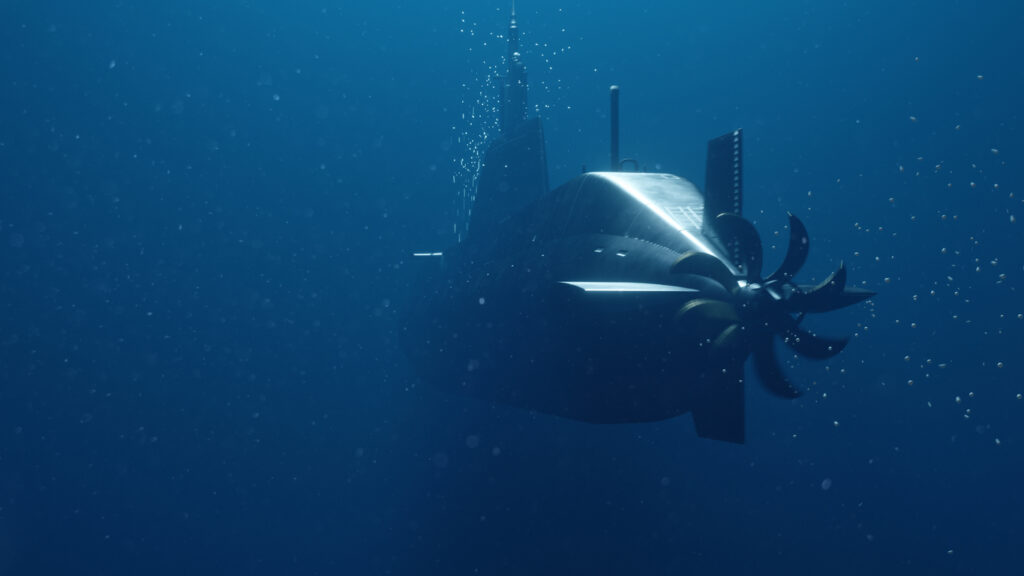
The export of submarines is no ordinary export business. Even the planning stage is subject to strict secrecy requirements. Construction and assembly must be organised in such a way that they not only run efficiently, but also remain hidden from the view and access of unauthorised persons - a logistical and security challenge that applies throughout the entire construction process.
In addition, every client has different requirements: climate zones, strategic goals, budgets, cultures, languages. What makes sense for a northern European coastal navy is not suitable for a tropical deep-sea navy and vice versa. German engineers and project managers must succeed in translating this diversity into concrete, realisable designs.
No one-size-fits-all boat: customised designs for every client
There is no submarine that fulfils all requirements. Size, range, armament and climate suitability are in direct conflict with each other:
| Feature | Small boat | Large boat |
|---|---|---|
| Crew | Smaller, cheaper to operate | Bigger, more expertise required |
| Sound signature | Quieter - lower localisation | Tends to be louder |
| Reach | Limited, for coastal use | High, ocean-going |
| Air conditioning | Simpler | More powerful - relevant for tropics |
| Weapon capacity | Limited | More torpedoes, missiles, possibly cruise missiles |
| Costs | Lower | Significantly higher |
Based on these considerations, engineers and clients work together to develop the right design. Once the design is finalised, it is accepted by the client and the crew is trained in system handling and maintenance - all with the involvement of teams from different cultures and languages.
The scope of a submarine export contract goes far beyond shipbuilding: it includes project management, intercultural communication, classified logistics, training and long-term service support.
What are the economic benefits and spillover effects?
Submarine construction is economically attractive for Germany for several reasons. Submarines require extremely energy-efficient propulsion concepts - a development requirement that has a direct impact on other industrial sectors. Quiet, compact and highly efficient propulsion technology developed in submarine construction is used in energy supply, civil shipbuilding and maritime research.
A wide range of industries also benefit: Shipyards, suppliers for electronics and sensor technology, drive technology, special materials, engineering offices and the regional economy around the shipyard locations. The skilled labour trained in these projects strengthens Germany's industrial base in the long term.
What is TKMS?
The best-known example of German submarine exports are the HDW submarines from Howaldtswerke-Deutsche Werft, which are now part of ThyssenKrupp Marine Systems (TKMS) is. The boats are internationally recognised for two unique selling points: advanced fuel cell systems for exceptional underwater endurance and an acoustic signature that makes them virtually invisible to enemy sonar.
TKMS not only builds submarines for the German Navy, but also exports them to South Korea, Greece and Turkey, among others - demonstrating that German submarine construction is competitive and in demand worldwide.
What are the requirements for supply vessels?
No warship can operate permanently without being supplied. Fuel, food, spare parts, ammunition, medicines, clothing, mail - all this has to get from home to the ships in the theatre of operations. Supply ships take on this task. They are rarely at the centre of attention, often operate in dangerous waters and make the difference between an operational fleet and one that has to return to its home ports.
Their requirements are far more complex than they appear at first glance:
- Speed: Supply vessels must be able to keep up with the fleet - this requires more powerful propulsion systems than civilian cargo ships of a comparable size
- Range: Despite higher engine power, the range must be sufficient for long operations
- Simultaneous supply: Suppliers can operate a ship on both sides at the same time - by line, fuel line and cable pull, while all three ships run side by side through the water at high speed
A supply ship can supply a warship on both sides with fuel, material and personnel at the same time - at full speed, in the middle of the theatre of operations.
What technology and equipment do modern suppliers have?
Supply ships are not simple freighters in navy colours. Their equipment systematically goes beyond what a ship of their size normally needs:
- Helicopter capacities: Less important for own helicopters, crucial for maintenance and loading of helicopters of warships in shuttle operations
- Communication systems: Powerful systems for constant connection with the entire fleet
- Sensors: For early detection of threats in the area of operation
- Armament: Rudimentary self-protection weapons - for example to defend against incoming missiles
- Infirmary: Larger than necessary for its own crew - for the care of wounded from other ships
- Reserve staff: Additional crew members can be carried on board and transferred to warships if there is a shortage of personnel
- Generators: Output far in excess of own requirements - for supplying power to damaged ships
- Fire extinguishing systems: Pump capacity for external extinguishing operations on stricken, burning ships
- Survivability: Constructively designed for multiple hits without sinking immediately
In which areas are supply ships particularly important?
During operations, supply ships are regularly called upon for tasks that go far beyond their basic function. This is not a coincidence, but something that is taken into account:
- Reconnaissance and patrol: With their extensive sensors, suppliers can monitor sea areas independently
- Weather ships: At fixed stations, they provide meteorological data for the entire fleet
- Workshop ship: Damaged ships can be technically supported - with electricity, extinguishing agents and repair personnel
- Tugboat: In emergencies, they pull unmanoeuvrable ships to safety
- Floating infirmary: In the event of mass casualties, the infirmary can be considerably extended by reallocating quarters
All these roles are possible because shipyards build supply vessels oversized from the outset: larger infirmaries, more powerful generators, more efficient pumps, more communication capacity - as a reserve for emergencies that come sooner than expected.
FAQ on submarine construction and supply ships
Why is Germany a leader in conventional submarine construction?
German shipyards - above all TKMS - combine advanced fuel cell technology (AIP), excellent acoustic camouflage and high export expertise. This makes their boats internationally competitive and in demand.
Which countries buy German submarines?
Customers include South Korea, Greece and Turkey. The boats are customised to the requirements of the respective customer.
What is the biggest difference between small and large submarines?
Small boats are quieter, cheaper and suitable for coastal operations. Large boats have more range, more powerful air conditioning systems and greater weapon capacity - but are more expensive and easier to locate.
What is the main task of a supply ship?
To bring fuel, food, spare parts and materials to the warships in the theatre of operations - if possible without slowing down or stopping the fleet.
Can supply ships supply several ships at the same time?
Modern supply vessels are designed in such a way that they can supply a ship on both sides at the same time - by fuel line and cable pull, at full speed.
Are supply ships armed?
As a rule, they only have rudimentary self-protection systems, for example to defend against incoming missiles. Their strength lies not in their weaponry, but in their endurance, versatility and survivability.
Further topics
The following articles delve deeper into related topics concerning military shipbuilding, industrial processes and the influence of modern naval technology on the economy and labour market.