
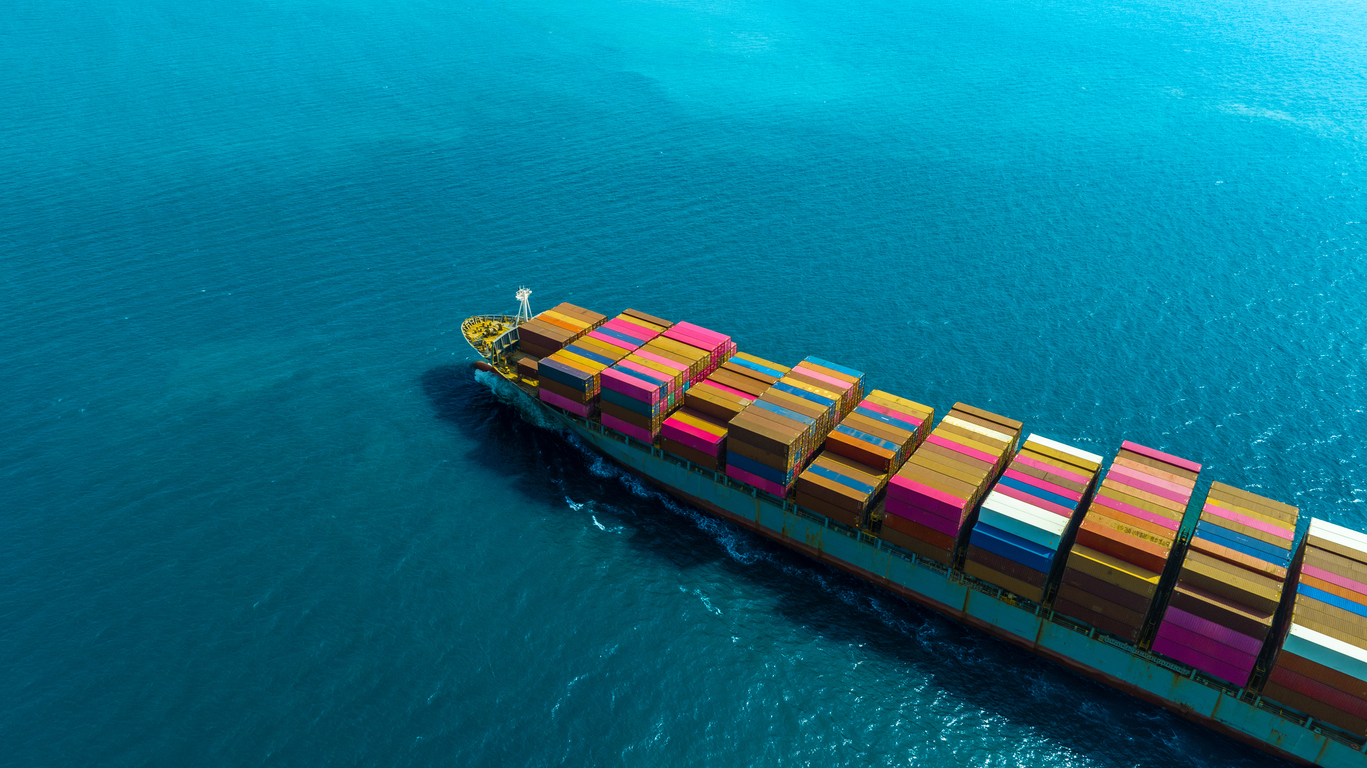
Building a container ship is one of the most complex industrial tasks of all. It is not about building a large, floating warehouse - but a structure that moves through waves and storms, carries tens of thousands of tonnes of load, protects crew and goods and at the same time operates economically and in an environmentally friendly manner. This article shows what this means in concrete terms - for shipyards, suppliers and Germany as a business location.
Table of contents
- How is the load secured on board?
- What is the difference between small feeder ships and large container ships?
- What is important when building a container ship?
- How does the interaction between suppliers, coordination and modern production processes work?
- What role does Germany play in global container shipbuilding?
- FAQ on container shipbuilding
- Further topics
Estimated reading time: 8 minutes
What is a container ship?
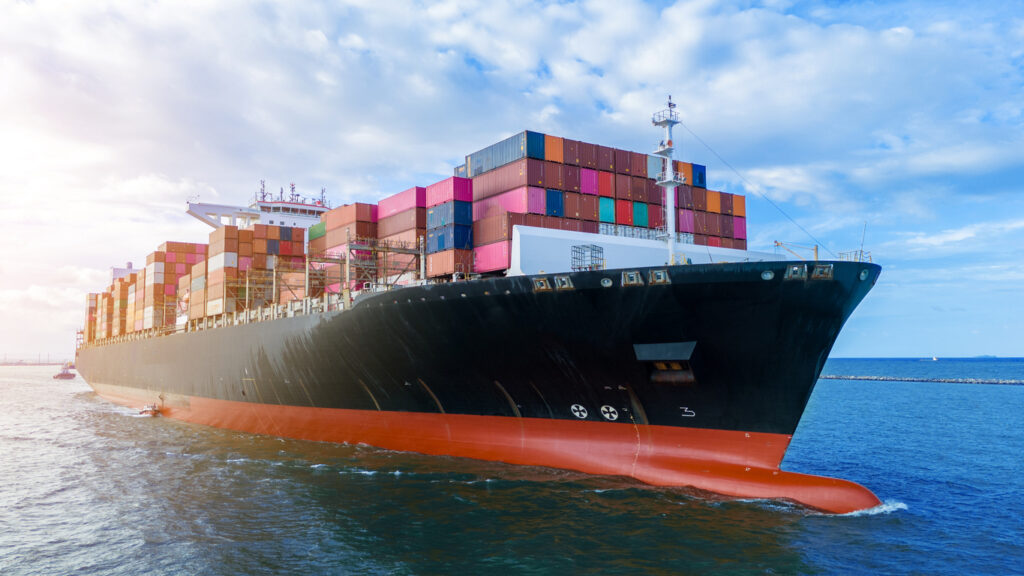
The decisive difference between a container ship and a warehouse building is not the size - it is the movement. A ship is permanently exposed to dynamic forces: Waves, pitching, rolling, lurching, plus the dead weight of the structure and the load of tens of thousands of tonnes of cargo. All of this acts simultaneously, in changing directions, in all weathers.
The focus of the designers is therefore on maximising load capacity and structural integrity under these extreme conditions. Both objectives are in permanent conflict - more capacity means more weight, more load on the structure, more demands on stability.
A container ship must be able to withstand severe storms without losing its structural integrity - and at the same time guarantee safety for the crew, the cargo and the marine environment.
Engineers develop sophisticated structures for cargo holds and vertical cell guides made of steel that hold each container precisely in place - even when the ship is being moved in all directions in heavy seas.
How is the load secured on board?
Below deck, cell guides ensure that the containers are held securely in place. On deck, further systems supplement these structural measures:
- Twistlocks and lashing systems: Mechanical connections that lock containers together and to the ship.
- Clamping devices: Secure the load stacks against shifting during rolling movements.
- Digital load management: Software continuously calculates weight distribution, stability and optimum stowage position for each container - and automatically controls the securing systems where possible.
The result: shorter handling times in the harbour, less manual work, lower error rates. In modern container shipping, digital cargo control is no longer a convenience feature, but an economic necessity.
What is the difference between small feeder ships and large container ships?
Container ships are not a homogeneous category. Small feeder ships and large ocean liners fulfil fundamentally different roles - and are equipped differently accordingly.
| Feature | Small feeder ship | Large container ship |
|---|---|---|
| Harbours | Small harbours, shallower basins | Large deep-sea harbours |
| Own cranes | Yes - indispensable | No - harbour infrastructure available |
| Task | Feeder to transshipment ports | Main transoceanic routes |
| Capacity | 1,000 - 3,000 TEU | up to 24,000 TEU |
The logic behind this is simple: small ships serve locations without major infrastructure and bring the containers to harbours where large ships take over. Large ships are dependent on this infrastructure - their own handling systems would be an unnecessary weight and cost factor.
What is important when building a container ship?
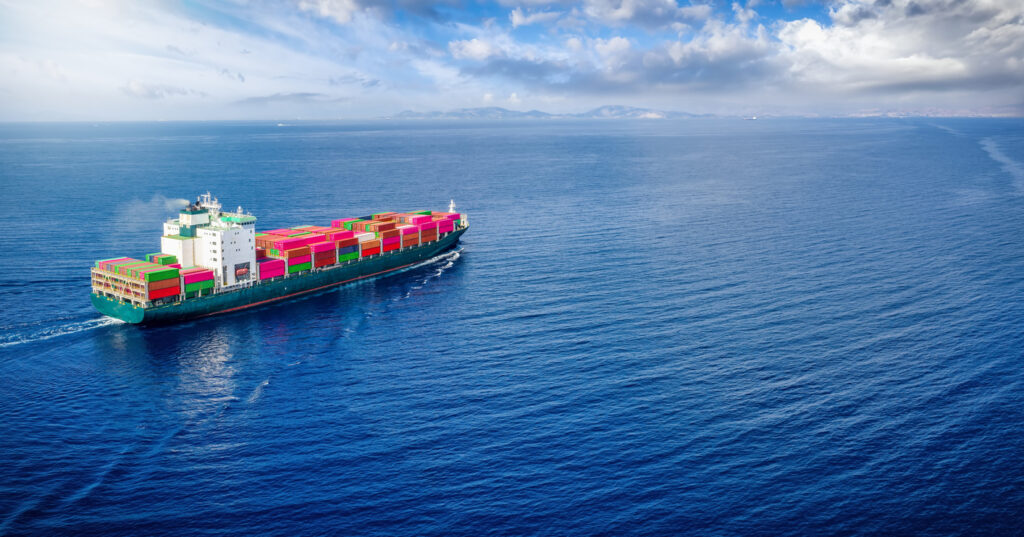
The construction of a container ship follows a modular principle. The ship is not built as a whole, but in individual blocks and segments, which are manufactured in parallel in different halls of the shipyard. They are only assembled into a complete ship in the dry dock.
Each block weighs hundreds of tonnes - and still has to be positioned with millimetre precision. Even small deviations when assembling the segments can lead to considerable problems during system integration: Pipes do not fit, cable feed-throughs are positioned incorrectly, structural connections do not close properly.
The time of system integration is therefore crucial: safety equipment, container guidance systems, ballast systems - all of this is installed and tested while the segments are still individual and accessible. After assembly, many of these areas are difficult to access.
One of the most complex work steps is the installation of the main engines: The foundations are set up precisely, the huge engines are lifted into place and anchored in such a way that they remain absolutely stable even in the event of strong ship movements. This is followed by the shaft systems, gearboxes and connections - work in which tolerances in the tenths of a millimetre range are crucial.
How does the interaction between suppliers, coordination and modern production processes work?
A shipyard does not build a container ship alone. It coordinates a network of suppliers, subcontractors and specialised companies that has to be activated months before the first steel cut is made:
- Motor manufacturers supply drive units with lead times of up to two years
- Propellers, rudder systems and generators are supplied by specialised suppliers in close coordination with the shipyard plan
- Steel suppliers provide the shipyard with large quantities of plates and profiles that must be available just-in-time
- Environmental technology suppliers provide scrubbers for exhaust gas cleaning and ballast water treatment systems - now required by law in almost all new buildings
Modern processes are used in production itself: welding robots for uniform, high-strength seams, computer-controlled steel cutting systems for precise component geometries and digital planning platforms that coordinate all trades and delivery dates in real time.
What role does Germany play in global container shipbuilding?
In the 1980s and 1990s, Germany was the world leader in container shipbuilding. Today, this position has been taken over by Asian shipyards - above all in South Korea, China and Japan, where lower labour costs and massive state subsidies dominate the series construction of large standard ships.
However, this does not mean withdrawing from the market, but rather refocussing on strengths that cannot be copied:
- Engineering offices: German design offices continue to develop new ship types, more efficient propulsion concepts and improved safety standards - and sell this expertise worldwide
- Special segments: Where sophisticated, innovative solutions are required, German shipyards are competitive
- Shipping companies: Germany is home to some of the largest shipping companies in the world. Hapag-Lloyd, for example, as one of the largest container liner shipping companies, directly influences the global requirements for ship design and technology
- supply industry: The strength of German shipbuilding increasingly lies in the depth of the supply chain - from propulsion technology and navigation systems to environmental technology
The Swiss-based Mediterranean Shipping Company (MSC), one of the largest container shipping companies in the world, is also a customer of German shipbuilding technology and engineering services.
The accumulated knowledge and experience gained from decades of container shipbuilding is constantly being channelled into new innovations - and ensures that Germany as a business location will continue to play a relevant role in a market that keeps the global economy running.
FAQ on container shipbuilding
Why is a container ship built in blocks?
The modular design enables parallel production in different halls, better accessibility for system installations and shorter overall construction times. The finished blocks are assembled into a complete ship in the dry dock.
Why do small container ships have their own cranes, but large ones do not?
Small feeder ships serve harbours without sufficient port infrastructure and therefore have to load and unload independently. Large ships utilise the crane capacities of large transshipment ports - own cranes would be unnecessary weight.
What are twistlocks?
Twistlocks are mechanical locking elements that connect containers to each other and to the ship at the corners. They prevent the cargo from slipping when the ship moves.
Is Germany still active in container shipbuilding?
Yes, Asian shipyards dominate the series construction of large standard ships. However, Germany is still a leader in engineering services, innovative ship types, the supply industry and as the home of large shipping companies such as Hapag-Lloyd.
What is a scrubber on a container ship?
A scrubber is an exhaust gas purification system that washes sulphur oxides out of engine exhaust gases. It makes it possible to burn cheaper heavy fuel oils even in strictly regulated sea areas instead of switching to more expensive low-sulphur fuels.
Why does ballast water need to be treated?
Ballast water contains microorganisms and microbes from the receiving area. If it is discharged untreated in another harbour, alien species can be introduced - with potentially significant ecological consequences.
Further topics
The following articles delve deeper into related topics around shipbuilding, industrial processes and the influence of modern shipping technology on the economy and labour market.