

The drive determines how long a submarine stays under water, how quiet it is - and ultimately whether it is detected at all. No other component has such a direct influence on the tactical survivability of a submarine. Conventional propulsion concepts are particularly relevant for German shipbuilding and are the focus here.
Table of contents
- How does the diesel-electric drive work on a submarine?
- Why doesn't the submarine with the snorkel have to surface?
- How does the AIP drive work?
- How does noise control work on a submarine?
- Why is the propeller the loudest part on board?
- Why is speed both a curse and a necessity for submarines?
- FAQ on submarine drives
- Further topics
Estimated reading time: 8 minutes
How does the diesel-electric drive work on a submarine?
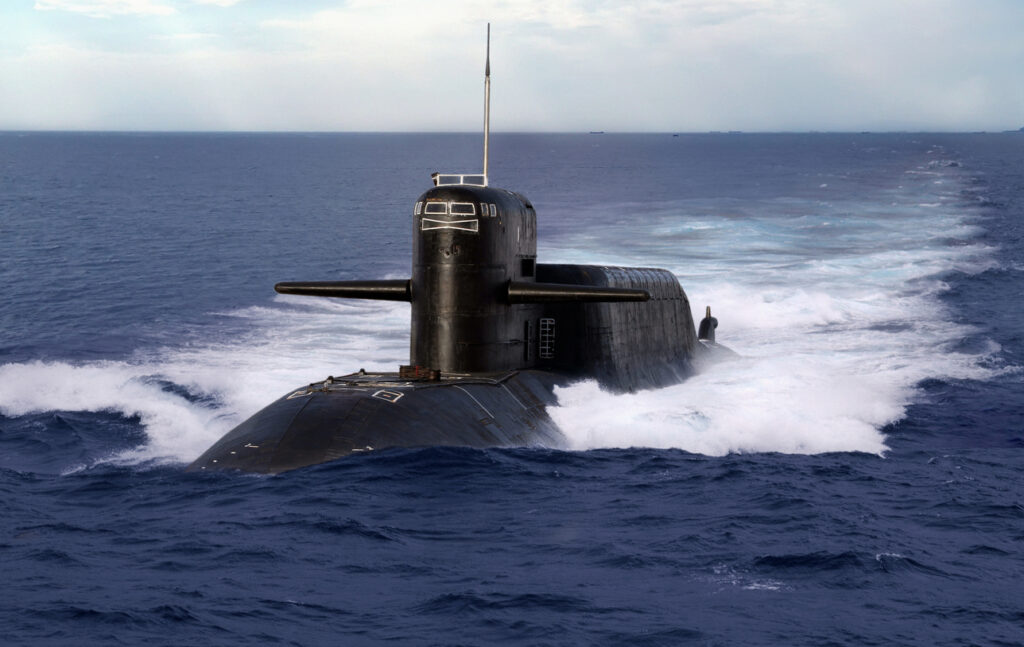
Conventional submarines have been operating on the same basic principle for decades: diesel engines generate electricity, electric motors drive the propeller. What has changed is the efficiency and intelligence of this system.
In the past, submarines used diesel engines on the surface and switched to battery operation when submerged. Today, the electric motor runs continuously and drives the propeller permanently. The diesel engines work as generators - they supply the electric motor directly or charge the batteries. This creates a smoother, more controllable operation.
| Drive mode | Energy source | Typical situation |
|---|---|---|
| Surface trip / snorkel | Diesel generators | Transit, recharge battery |
| Submerged, normal ride | Batteries + electric motor | Operation mode |
| Submerged, very quiet | Batteries alone, minimum load | Lurking, Enlightenment |
| AIP mode | AIP system + batteries | Long underwater endurance without a snorkel |
Why doesn't the submarine with the snorkel have to surface?
One of the most practical developments in conventional submarine construction is the snorkel. It consists of an extendable pipe with two channels: The diesel engine draws in fresh air through one channel and blows out the exhaust gases through the other. At periscope depth, the boat can thus operate the diesel engines without surfacing completely - and therefore without being fully exposed to the radar. At the same time, the crew receives fresh air in this way.
However, the snorkel has its limits: If the speed is too high, the mechanical load on the extended tube is too great. Snorkel operation therefore always means reduced speed.
How does the AIP drive work?
AIP stands for Air Independent Propulsion - Drive independent of the outside air. These systems generate electrical energy under water without having to extend the snorkel. This allows a submarine to remain submerged for days without generating an acoustic or visual signature.
AIP systems work with various chemical processes, such as hydrogen-oxygen-based fuel cells. However, they only deliver low power - sufficient for slow cruising and basic operation on board, not for sprints. Some newer boats dispense with chemical AIP systems altogether and instead rely on significantly larger battery banks with modern lithium-ion technology, which enable comparable underwater endurance.
AIP advantage: A submarine with AIP or a large battery reserve can remain submerged for days without using the snorkel - and thus remains virtually invisible to enemy sensors.
For longer dives, submarines also filter CO2 from the cabin air and extract oxygen from the seawater - technologies that were developed especially for nuclear submarines, but which are increasingly also benefiting conventional boats.
How does noise control work on a submarine?
Under water, sound is the most important means of detection. What a submarine hears gives its enemy away - and what it emits itself gives the enemy away. Noise control is therefore not a comfort measure, but a vital engineering task.
Several measures are interlinked:
- Electric motors: Run significantly quieter than combustion engines by design
- Vibration-damped bearing: All moving parts are mounted on rubber absorbers - no direct connection to the fuselage
- Insulated engine deck: The entire engine room is also acoustically decoupled from the rest of the ship
- Exterior coatings: Special hull coatings absorb active sonar pulses from the enemy before they are reflected
- Depth selection: Submarines measure water temperatures at various depths. They operate where temperature layers deflect the enemy's sound but shield their own
The result is remarkable: a modern submarine - even with nuclear propulsion, which is generally louder than electric propulsion - produces about as much sound in operation as an 80-watt light bulb. This is less than the natural background noise of the sea.
Why is the propeller the loudest part on board?
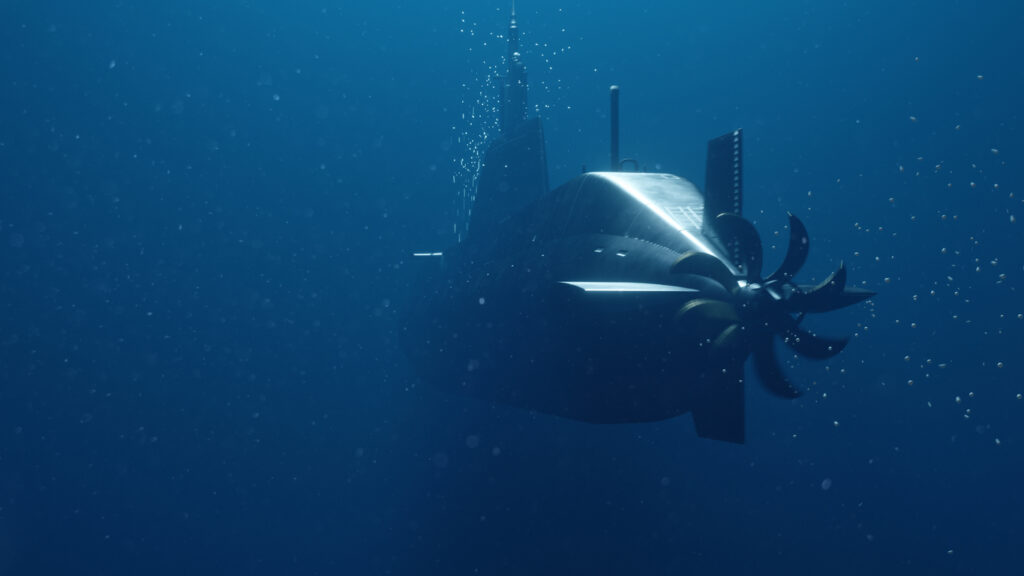
The loudest single component of a submarine is the propeller. If you look at pictures of submarines in the shipyard, you will notice that the stern area is almost always covered. The visible propeller in photos is usually a replacement propeller - the real propulsion propeller is secret.
The reason lies in physics: when a propeller blade rotates through the water, a vacuum is created at its rear. Air bubbles form in this negative pressure - an effect known as Cavitation is known. The faster the propeller turns, the more bubbles are created, the louder they burst - and the more clearly the submarine can be heard by enemy sonar.
Modern submarine propellers are designed in such a way that cavitation is largely suppressed. There are two other approaches to this:
- Propeller encapsulation: A shroud keeps the pressure around the propeller blades stable and prevents bubbles from forming.
- Pump drives (pump jets): Replace the free propeller completely with an encapsulated jet engine in the water. Details of these systems are subject to strict secrecy.
Why is speed both a curse and a necessity for submarines?
Speed and stealth are largely mutually exclusive in submarines. Fast travel generates noise - loud boats are localised and encounter tactically blind sonars, as their own noise overrides the sensors. In a sense, a fast submarine is blind itself.
The problem is exacerbated for conventional boats: their propulsion power is limited. Theoretical maximum speeds of around 20 knots are hardly practical for diving - at snorkelling depth, the current puts too much strain on the tube, and at depth, full-throttle e-motors drain the batteries in less than two hours.
Nevertheless, speed is sometimes necessary: To pursue an enemy, to escape from an enemy or - particularly valuable tactically - to take up a position outside the enemy's sensor range, which the enemy must pass in a short time.
Why are gas turbines the solution for conventional submarines?
Gas turbines would be ideal for higher speeds - but they need huge amounts of fresh air, more than a snorkel can supply. A submerged submarine, on the other hand, is easy to locate using radar.
One design solution combines both: the tower is extended so that it functions as a large snorkel. The tower itself contains two gas turbines that generate electricity and drive an electric turbine in the boat - enough for over 25 knots. The tower protrudes out of the water, but only has the signature of a speedboat for a radar. This is acceptable for the march to the deployment area. For diving, the turbines are switched off, the air inlets are closed and the electric drive takes over again.
FAQ on submarine drives
What is the difference between conventional and nuclear submarine propulsion?
Conventional submarines use diesel generators and electric motors, supplemented by batteries and possibly AIP systems. They have to snorkel or surface regularly. Nuclear submarines can remain submerged almost indefinitely, but are generally noisier and more expensive.
What is AIP and what benefits does it offer?
AIP (Air Independent Propulsion) makes it possible to generate energy under water without the need for outside air. This extends the underwater endurance to days without the submarine having to snorkel or surface - and therefore without an acoustic or visual signature.
Why is the propeller the loudest part of a submarine?
When turning, propeller blades generate a vacuum in which air bubbles form and burst - known as cavitation. This noise can be heard from afar via sonar. Modern propellers and pump drives are designed to minimise cavitation.
How quiet are modern submarines?
Modern submarines generate about as much noise in operation as an 80-watt light bulb - less than the natural background noise of the sea. This is the result of insulated engine rooms, vibration-damped bearings and quiet electric motors.
Why can't submarines just go fast?
High speed generates noise and makes the submarine easily detectable by enemy sonar. At the same time, the submarine's own sonar is overlaid by its own noise, making it tactically blind. Conventional boats also have limited energy reserves for high speeds.
Why is the propeller usually covered in submarine photos?
The exact geometry of modern submarine propellers is subject to strict secrecy, as it has a direct influence on the acoustic signature. Publicly visible propellers in shipyard photos are usually replacement propellers, not the operational propulsion units.
Further topics
The following articles delve deeper into related topics concerning military shipbuilding, industrial processes and the influence of modern naval technology on the economy and labour market.