
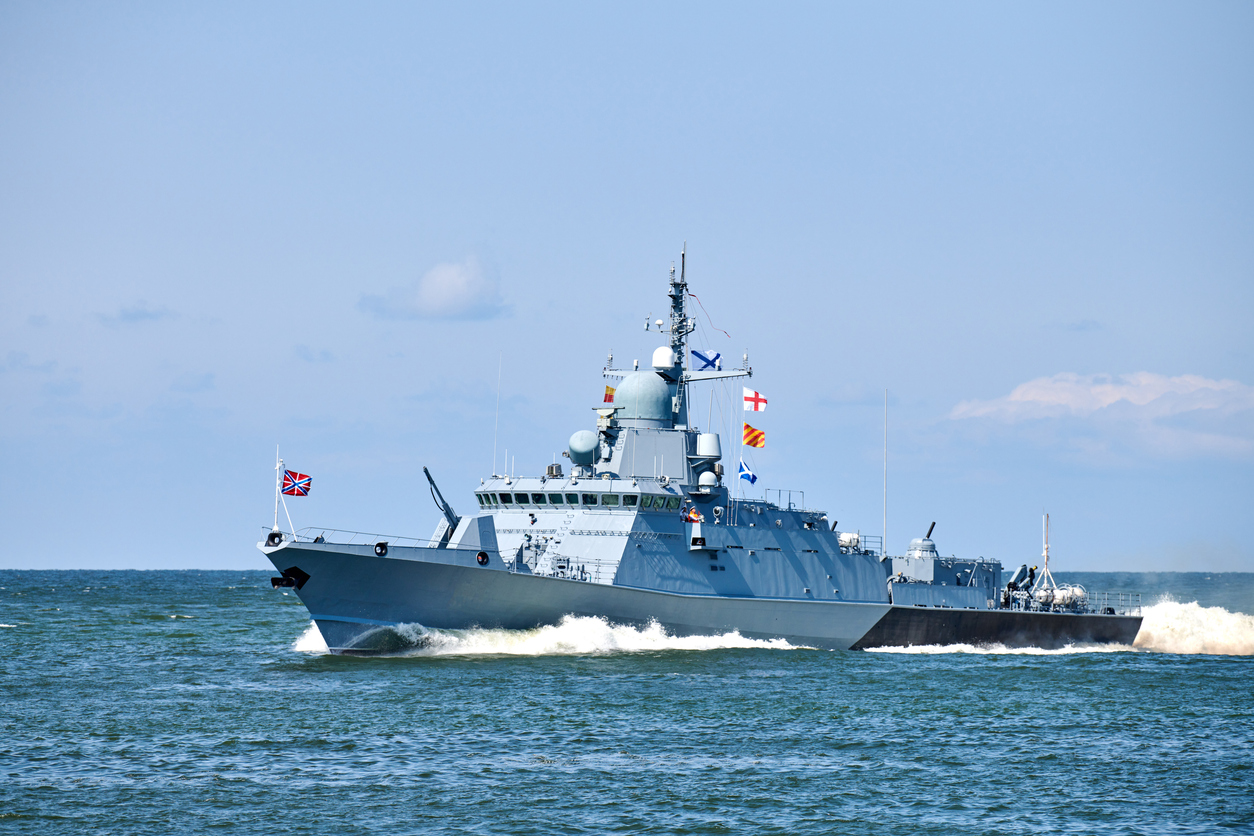
Corvettes are the underestimated workhorses of modern navies. Smaller and cheaper than frigates, but more versatile than pure patrol boats, they fill the gap left by larger units. This segment is therefore more economically significant for German shipbuilding than it might appear at first glance.
Table of contents
- What missions and tasks do corvettes have?
- What is the technical and logistical design?
- Drive concepts in comparison
- Costs and production: The efficiency imperative
- What is the economic significance and market potential of corvettes?
- Germany as a supplier in the corvette market
- FAQ on corvettes
- Further topics
Estimated reading time: 7 minutes
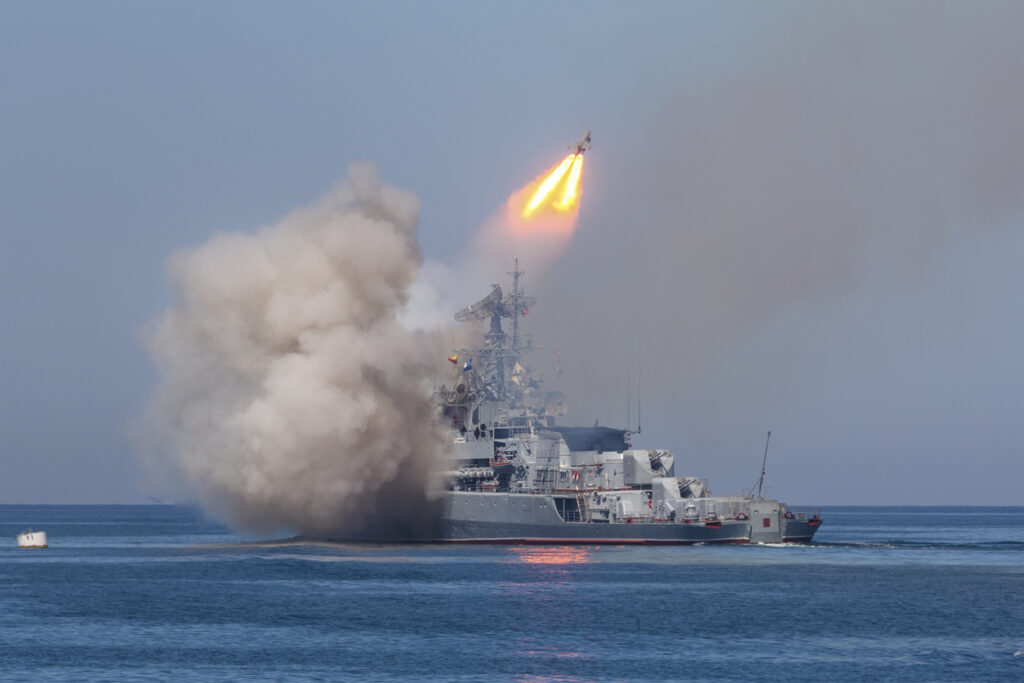
What missions and tasks do corvettes have?
The corvette is and always has been a stopgap. Wherever the deployment of frigates or destroyers would be a waste of resources, and wherever navies cannot afford larger units, the corvette is the first choice.
The mission profile is clearly defined: A corvette is a small ship with limited capabilities - and that is not a flaw, but the intention. In practice, it functions as a so-called 1D shipIt is optimised for combat in a single domain, either against surface or underwater targets.
Typical tasks of the corvette are reconnaissance, counter-piracy, flying the flag, protecting sea routes and humanitarian missions. Due to their small size, corvettes are often dependent on supply ships for longer operations.
All corvettes have some form of air defence, but only to a limited extent. Range and capabilities are limited to short-range missiles or artillery for defence against immediate threats, such as an anti-ship missile on final approach.
What is the technical and logistical design?
The technical equipment of a corvette consistently follows the principle of economic efficiency. Each unit has basic air defence capabilities; everything else depends on the respective operational focus.
Corvettes against surface targets
These variants carry anti-ship missiles and artillery. If a corvette is not designed for this domain, the artillery is reduced to smaller calibres for air defence, and missiles are present in smaller numbers or are absent altogether. The sensors are also simplified in order to save weight and costs.
Corvettes against underwater targets
U-Jagd corvettes carry sonars, torpedoes and/or helicopters. If there are no torpedoes, the helicopter takes on the role of torpedo carrier. If no helicopters are available, drones are used - small, unmanned platforms with sensors and torpedoes. Corvettes without this specialisation usually dispense with submarine-hunting capabilities completely, as the sensors alone entail considerable weight and high costs.
| Type | Main domain | Typical armament |
|---|---|---|
| Flood control | Ships / Surface | Anti-ship missiles, artillery |
| U-Hunt | Underwater / ASW | Sonar, torpedoes, helicopter / drone |
| Gap filler / Patrol | Multipurpose (limited) | Artillery, short-range air defence |
Drive concepts in comparison
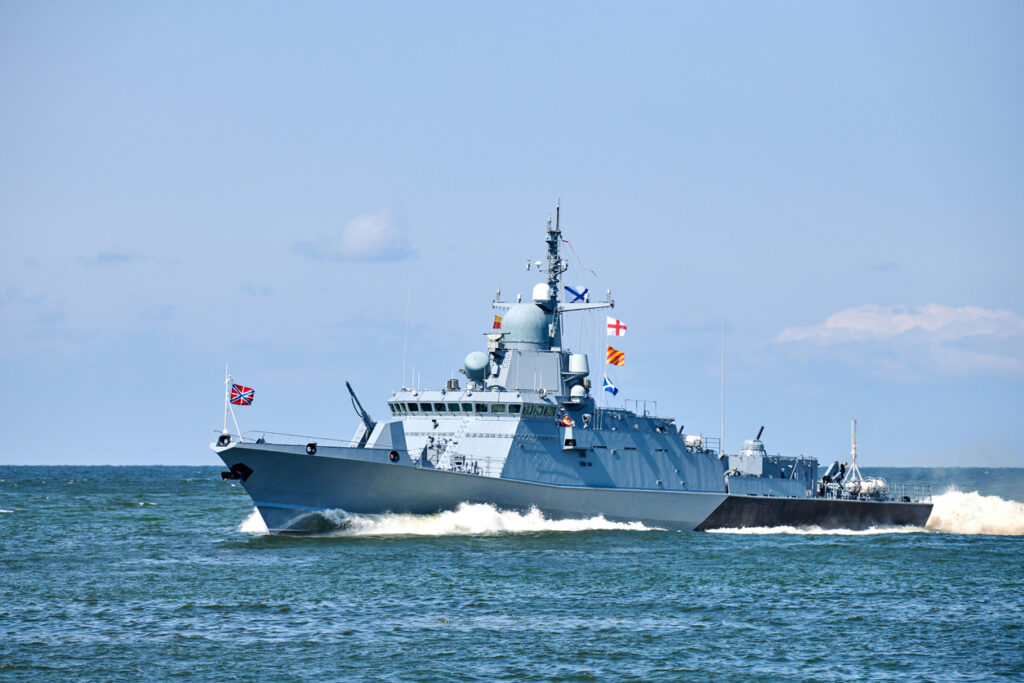
In terms of propulsion, corvettes are similar to frigates - but in a significantly reduced form. The choice of propulsion concept depends directly on the mission profile.
- Diesel drive (single): Standard for gap-filler corvettes. Low production costs, low fuel consumption, easy maintenance
- CODAD (Combined Diesel and Diesel): Two diesel engines for higher speed - useful when engaging surface targets, as corvettes then have to be able to flee or pursue
- CODOG / CODAG (with gas turbine): Gas turbine for top speeds. Corvettes are more cost-intensive to operate and maintain. Gas turbines consume significantly more fuel and require specially trained personnel
- Diesel-electric drive: For sub-hunting corvettes. Electric motors enable quiet operation when the corvette needs to be acoustically inconspicuous. In normal operation, running diesel generators feed the electric motors
Combined propulsion systems that combine diesel, electric motors and turbines are rarely used on corvettes - the logistical and financial costs would simply be too high for a small gap-filler.
Costs and production: The efficiency imperative
Corvettes are ordered because they are cheap. That sounds simple, but it has far-reaching consequences for planning, production and handover. From the first design drawing to commissioning, there is one iron rule: work as efficiently as possible.
Nothing that is not absolutely necessary belongs in a corvette. These are not ships where everything is possible in terms of price - these are the inexpensive helpers that are on hand where the big all-rounders would be overkill.
The secrecy and design challenges are similar to those of frigates, but are easier to plan and realise due to their lower complexity. The smaller hull size also simplifies production planning.
What is the economic significance and market potential of corvettes?
The ratio of corvette to frigate is the same as that of frigate to destroyer: where more frigates are built because they are cheaper than destroyers, even more corvettes are built because they are even cheaper than frigates.
In economic terms, this can be illustrated with a well-known comparison: The destroyer is the Ferrari - powerful, rare, expensive. The corvette is the Volkswagen - available everywhere, reliable, affordable.
For the shipbuilding market, this means that not only navies that already operate frigates and destroyers are ordering additional corvettes - they are doing so in larger numbers. There are also navies that can afford neither destroyers nor frigates and use the corvette as their main combat unit. The market potential therefore considerably exceeds that of the larger ship classes.
Germany as a supplier in the corvette market
German shipbuilding is well positioned in this segment for several reasons:
- Reference projects in Germany: The German Navy operates frigates that were built in Germany - a credible advertising measure for international customers.
- Quality call: German shipyards are internationally recognised for reliability and high integration quality. Navies with limited budgets that do not maintain larger units attach particular importance to quality - because the corvette has to take on the heaviest tasks there.
- System openness: German shipyards integrate weapons systems from numerous countries. A customer can choose between
| Category | Examples | Origin |
|---|---|---|
| Artillery | OTO Melara 76 mm | Italy |
| Air defence | SeaRam, Aster 15 / VL MICA, Denel Umkhonto | USA, France, South Africa |
| Anti-ship | Naval Strike Missile, Exocet, RBS 15 | Norway, France, Sweden |
This system openness makes the offer particularly attractive for clients with small budgets and specific requirements: they receive customised solutions instead of a rigid standard package.
FAQ on corvettes
What is the difference between a corvette and a frigate?
Frigates are larger, more versatile and designed for a wider range of tasks. Corvettes are smaller, cheaper and focussed on one domain or clearly limited missions. This makes them the more practical choice for many navies.
Why do many countries prefer to build corvettes rather than destroyers?
Destroyers are very expensive and can only be realised in small numbers. Corvettes offer a better balance of cost, availability and operational flexibility - especially for smaller navies without a large armaments budget.
How is a corvette typically armed?
This depends on the focus of the operation. Anti-ship missiles and artillery are used against surface targets. Sonar, torpedoes and helicopters or drones are used for submarine hunting. All corvettes have limited short-range air defence.
What propulsion do corvettes have?
Depending on the task: simple diesel drives for patrol missions, CODAD configurations for higher speeds, CODOG/CODAG with gas turbines for peak performance or diesel-electric drives for quiet operation during submarine hunting.
What role do German shipyards play in the corvette market?
Germany is well positioned: high quality standards, proven reference projects and the ability to integrate international weapon systems. This makes German corvettes particularly attractive for export-oriented defence projects.
What role do corvettes still play today?
Corvettes serve as gap fillers for patrol, surveillance and presence tasks, relieving larger combat ships for more strategically important missions.

Further topics
The following articles delve deeper into related topics concerning military shipbuilding, industrial processes and the influence of modern naval technology on the economy and labour market.