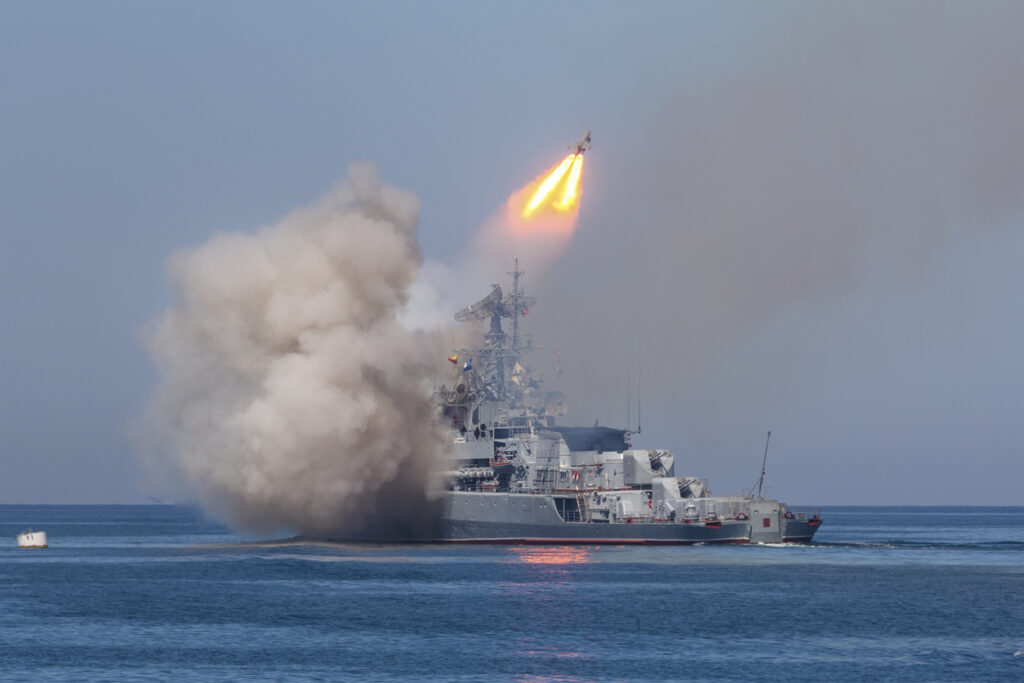
Modern frigates are once again a permanent fixture in many navies, even if the term is used differently internationally. While some countries refer to almost every combat ship as a frigate, others associate it with a clearly defined class of ship with fixed expectations in terms of size, task and equipment.
In the classic understanding, frigates are the next smaller class below destroyers. They are usually in the range of about 3,000 to 5,000 tonnes and are predominantly used as so-called 2D ships designed. This means that they are optimised for combat in two domains, typically the Submarine hunt and the Battle against enemy surface units.
The advantage of this design lies in the compactness of the required sensor technology. Sonar systems in particular are located below the waterline and can be integrated in a comparatively space-saving manner. This means that frigates remain smaller, more stable and more economical than larger multi-purpose combat vessels.
Despite their focus, modern frigates are by no means defenceless against air attacks. They generally have powerful systems for close and medium-range defence, but are not primarily designed to protect an entire formation against air threats over long distances.
Armament, sensors and VLS systems
Modern frigates are also comprehensively armed. The standard equipment today includes VLS cells for guided weapons, anti-ship missiles, torpedoes, a main gun and close-range defence systems. There are also powerful sensors for reconnaissance above and under water.
The difference to the destroyer lies less in the type of systems than in their scope. Frigates usually carry fewer weapons and fewer start cells, but are consistently adapted to their intended use.
There are several approaches to VLS systems. Some frigates use the same cells as destroyers, but carry a smaller number of them. Other classes rely on shorter or lighter VLS cells designed for short and medium-range missiles. These require less space and can be more easily integrated into smaller ships.
Another difference results from the launch procedure of the missiles. In a hot launch, the rocket's engine ignites directly in the airframe, which places high demands on heat protection and structure. In a cold launch, the rocket is first ejected from the airframe and only ignites outside, which makes the airframes easier to handle.
Optimisation is also evident in the artillery: frigates often use smaller calibres than destroyers, which saves weight and reduces the logistical effort. The armament is almost always supplemented by a separate airborne component with a landing deck and hangar for helicopters and increasingly also for unmanned systems.
Propulsion and engine concepts of modern frigates
The Propulsion and engine concepts of modern frigates are strongly orientated towards those of destroyers, but are adapted in terms of performance and scope. The aim is to achieve a good balance between range, speed, low noise and cost.
As a rule, the following are used for the march Diesel engines for use. They are considered efficient, reliable and comparatively cheap to operate. Many frigates are deliberately designed so that they can cover long distances at a moderate speed.
Gas turbines are used where a high maximum speed is required. They enable rapid acceleration and high cruising speeds, but are significantly more fuel-intensive. For this reason, they are not always available on frigates, but depend on the mission profile.
For the submarine hunt, the Acoustic signature plays a decisive role. For this reason, many frigates combine diesel generators with electric traction motors, to be able to operate particularly quietly. This stealth mode improves your own sensor performance and reduces the likelihood of being detected.
Depending on the class, different combinations are therefore used: pure diesel systems, diesel-electric concepts or mixed forms with an additional gas turbine. The choice is largely determined by the order, operational doctrine and budget.
Frigates in a task force and cost aspects
In many navies, frigates are used as Cost-efficient supplement to destroyers. While a destroyer often takes on the role of command and air defence ship, several frigates complement the formation with specialised tasks such as anti-submarine defence, security or patrol duties.
This role also explains their lower costs. Frigates are smaller, carry fewer sensors and weapons and have more compact machinery. This reduces construction, operating and maintenance costs, but also limits peak performance and reserves.
Special roles and endurance-orientated frigates
Some modern frigates specialise in long-term, low-intensity missions. These include humanitarian missions, stabilisation operations, evacuations or a permanent presence in remote sea areas.
In order to fulfil these tasks, either the armament and weight are reduced or the ship is designed to be larger overall. In both cases, the Endurance in the foreground. The machine systems are optimised for long, continuous operation and rely on downgraded, particularly durable diesel engines with low consumption.
Conclusion
Modern frigates are highly optimised combat ships that are specifically tailored to their mission. This optimisation is particularly evident in the propulsion and engine concepts: diesel for range, electric propulsion for quiet operations and gas turbines for high speed - individually or in combination, depending on requirements.
Frigates thus remain a central element of modern naval forces and combine military performance with economic efficiency.
Further topics
The following articles delve deeper into related topics concerning military shipbuilding, industrial processes and the influence of modern naval technology on the economy and labour market.
In order to provide you with an optimal experience, we use technologies such as cookies to store and/or access device information. If you consent to these technologies, we may process data such as browsing behaviour or unique IDs on this website. If you do not give or withdraw your consent, certain features and functions may be affected.
FunctionalImmer aktiv
Technical storage or access is strictly necessary for the legitimate purpose of enabling the use of a particular service explicitly requested by the subscriber or user or for the sole purpose of carrying out the transmission of a communication over an electronic communications network.
Preferences
The technical storage or access is necessary for the legitimate purpose of storing preferences that have not been requested by the subscriber or user.
Statistics
The technical storage or access, which is solely for statistical purposes.Technical storage or access used solely for anonymous statistical purposes. Without a subpoena, voluntary consent from your Internet service provider, or additional records from third parties, information stored or accessed for this purpose cannot generally be used alone to identify you.
Marketing
Technical storage or access is necessary to create user profiles, to send advertising or to track the user on a website or across multiple websites for similar marketing purposes.
Modern frigates: Propulsion and engine concepts explained
Modern frigates at a glance: Tasks, armament, VLS cells and propulsion concepts with diesel, gas turbine and electric propulsion - clearly explained.
Homepage
Contributions
Modern frigates: Concept, role and expectations
Employee leasing Eastern Europe
Zeitarbeit International is an international personnel service provider specialising in the temporary employment of German-speaking workers from abroad (temporary workers, subcontractors, freelancers from Eastern Europe). Our personnel services: Labour leasing Eastern Europe, temporary work Eastern Europe, work contracts, service contracts, outsourcing Eastern Europe. Our partner countries: Poland, Czech Republic, Slovakia, Romania, Hungary, Slovenia, Latvia, Lithuania, Baltic States, Ukraine. We provide skilled and unskilled labour for industry, logistics, production, medicine, industrial assembly, plant construction, IT, engineering with impeccable references, offer legally compliant temporary employment contracts, contracts for work and services and service contracts.