
Military shipbuilding is one of the most complex industrial disciplines of all. Destroyers and frigates in particular combine highly developed technology, enormous logistical requirements and considerable economic significance. In addition to their military role, they are an expression of industrial performance, technological innovation and the historical development of maritime power.
Table of contents
Estimated reading time: 6 minutes
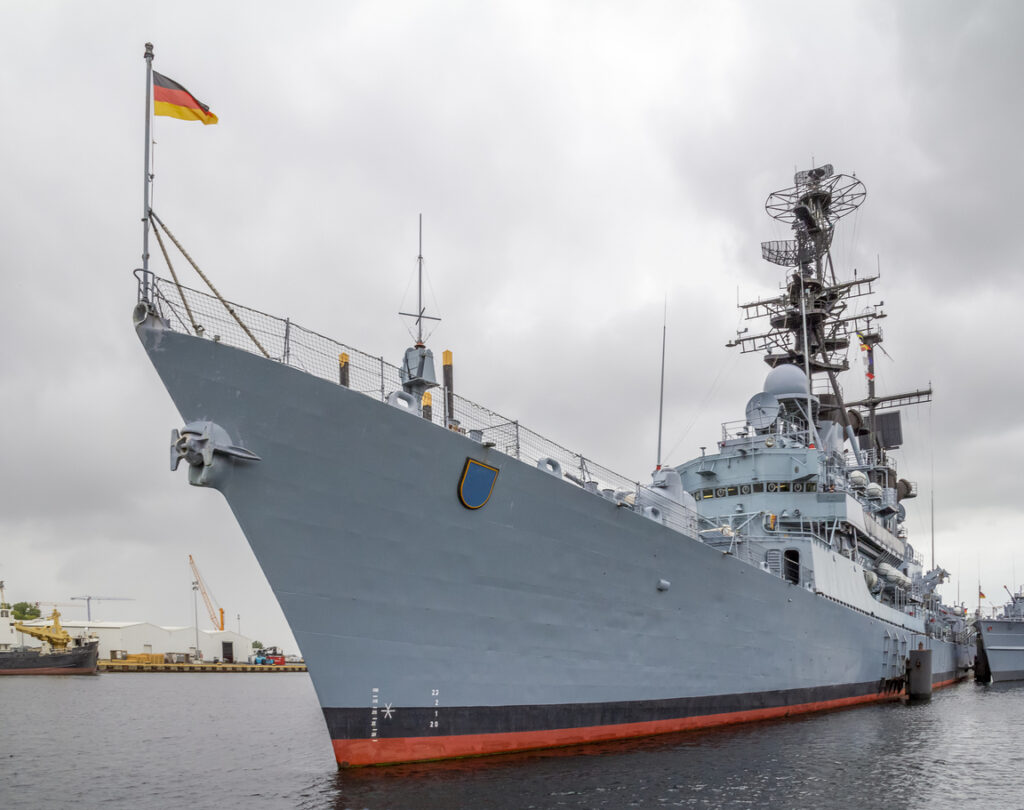
Logistics, production and responsibility in the construction of modern destroyers
Complex supply chains have to be set up and coordinated for the construction of a destroyer. These include manufacturers of propulsion systems, electronics, sensors, weapon systems and numerous specialised suppliers. The shipyards not only take on the shipbuilding itself, but also the management of large components, which are often delivered as complete sections. These are assembled using heavy lifting operations and efficiently integrated into the construction process through just-in-time deliveries.
The entire production process is organised on a modular basis. Different sections are built in parallel in different halls and are later joined together. The shipyards integrate the technical systems during, before or immediately after this assembly. Extensive tests are then carried out to check the power supply, test the combat management systems and check all components for faults.
Strict confidentiality procedures apply throughout the entire construction process. These not only make installation and testing more difficult, but also increase the organisational effort considerably. At the same time, the shipbuilders involved are aware of their responsibility, as technical errors can have a direct impact on the safety and lives of the crew in an emergency.
Ships are always under constant strain. There is hardly a moment when all systems work completely faultlessly. Maintenance and repairs are part of everyday life, regardless of whether the ships are civilian or military. The crucial difference, however, is that military systems offer no room for failure in combat. If a central system fails at the wrong moment, the consequences are irreversible.
A well-known example of this is the sinking of HMS Coventry on 25 May 1982 during the Falklands War. The destroyer was operating on patrol together with HMS Broadsword. Coventry was intended to engage high-flying air targets, while Broadsword's short-range air defence system was designed to defend against low-flying targets and so-called sea skimmers. When Argentinian aircraft attacked, they flew so low that Coventry's systems were unable to detect them. At the same time, Broadsword's system was out of action due to a necessary restart. Coventry was destroyed by several bomb hits, while Broadsword was badly damaged.
With such responsibility, shipyards must ensure that a destroyer's systems function reliably even after years of intensive use. The construction and quality assurance of these ships are therefore of central importance for their operational capability.
Economic significance and technological effects of military shipbuilding
There are only a few countries left in the world that are capable of building such complex weapon systems as destroyers. This makes it all the more important for Germany to retain this capability. The construction of a destroyer involves extensive industrial value chains. Highly qualified specialists work in the shipyards, while suppliers deliver numerous high-tech components. Engineering firms take on the planning, development and programming of complex software.
A single destroyer is already a major order. The construction of entire ship classes secures regional labour markets, promotes training and strengthens the technological basis. This industrial expertise has a positive long-term effect on the competitiveness of the German shipbuilding industry and its position on international export markets.
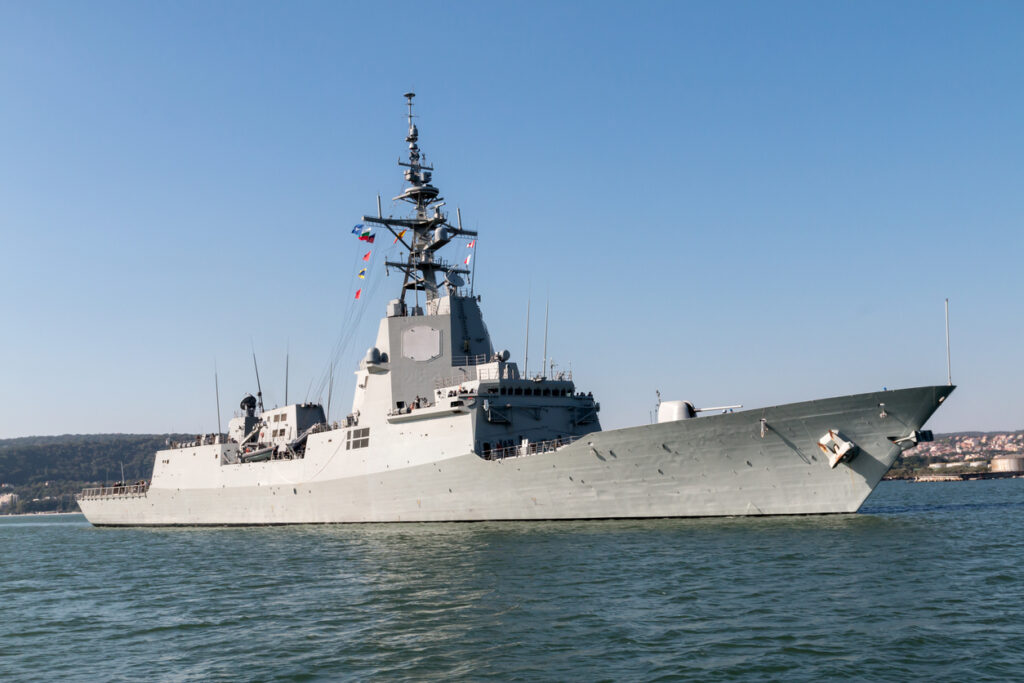
There are also important spillover effects. Many technological developments have their origins in the military sector. Early on, warships had to engage moving targets over long distances. This gave rise to complex fire control systems, mathematical calculation methods and early forms of computer technology. Radar, digital target allocation and networked systems developed from these requirements.
Even today, military innovations are being channelled into civilian applications. Advances in propulsion systems, energy management and sensor technology are finding their way into merchant ships and other industries. Modern military ships have energy-efficient propulsion systems, reduced radar cross-sections and hybrid forms of energy. These technologies lower fuel consumption, reduce emissions and extend system lifecycles.
Modular concepts enable economies of scale and facilitate subsequent modernisation. New systems can be integrated into existing structures without having to rebuild the entire ship. This increases efficiency in production and extends the service life of the platforms, which in turn ensures the competitiveness of the industry.
The frigate in a historical context
To better understand the role of destroyers today, it is worth taking a look at the historical development of the frigate. In the age of sailing ships, the frigate was clearly defined. In terms of size, they were below ships of the line or battleships, but above smaller auxiliary vessels. Age and year of construction played a role, so that older ships of the line could be smaller than newly built frigates.
However, its function was decisive. The frigate served as a scout for the battle fleet, as a hunter of enemy merchant ships and as an independent combat unit on foreign stations. They were faster, lighter and more enduring than ships of the line. Due to its higher speed, it was able to reconnoitre enemy fleets without coming within range of the cannons and transmit important information.
Away from major naval battles, frigates roamed the seas, captured enemy merchant ships and resupplied themselves from their cargo. On foreign stations, they often replaced larger battleships, as these were intended for concentrated use at home. In addition, frigates took on tasks within or close to the battle line, such as transmitting flag signals or attacking weakened opponents.
However, with the advent of steamships, greater weapon range and modern communications, the classic frigate lost its importance. New types of ship such as cruisers took over their tasks. This marked the end of the historical role of the frigate, while the term was later redefined and adapted in the modern navy.
Further topics
Modern destroyers are constantly evolving. Topics such as directed energy weapons, advanced sensor fusion and new propulsion technologies are becoming increasingly important.